
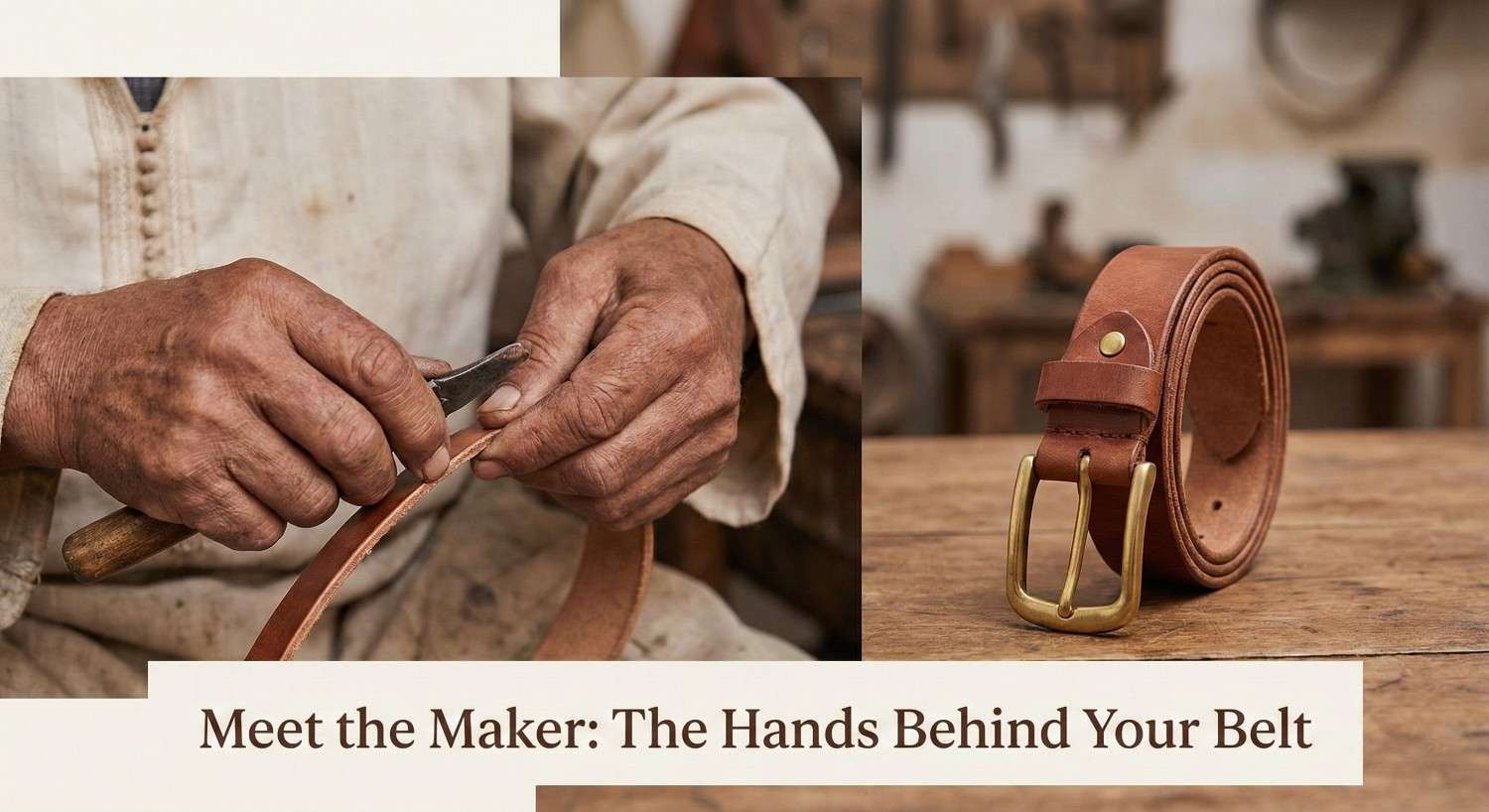
Let’s be honest. Most mornings, putting on your belt is muscle memory. It’s the last thing you do before grabbing your keys and heading out the door. It’s a utility. An afterthought.
But if you’re wearing a Kasba Leather belt, that strip of leather around your waist has a secret life. It didn’t just pop out of a high-speed machine in a sterile factory. It was wrestled, coaxed, cut, and smoothed into existence by a real person in Morocco—someone whose hands tell the story of decades of tradition.
We want to pull back the curtain and introduce you to the “who” and the “how” behind your daily essential.
Enter the “Maallem”
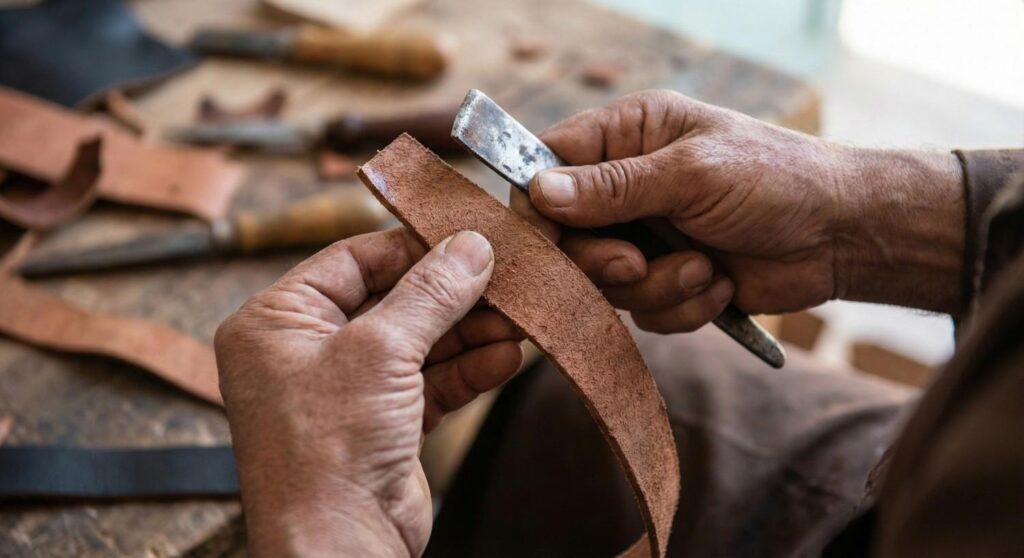
In Morocco, a master craftsman is called a Maallem. You don’t get this title from an online course. You earn it through years of apprenticeship, watching, repeating, and messing up until your hands know the material better than your brain does.
The heart of Kasba Leather lies with these artisans—specifically, the 30 years of experience our lead artisan (my father) brings to the workbench.
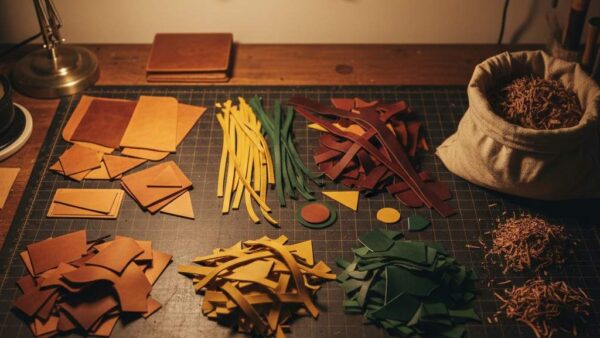
Picture this: A bustling workshop in Morocco. The air smells richly of earth and tannin. In the corner, a radio plays traditional chaabi music, competing with the rhythmic tap-tap-tap of a hammer. There is a pot of strong, sweet mint tea brewing on a small burner. This is where your belt begins.
It isn’t an assembly line; it’s a one-man symphony of skill.
The Journey from Hide to Hip
Making a belt seems simple, right? It’s just a long strip with holes in it. If only it were that easy. A Kasba belt goes through a gauntlet of hands-on processes before it ever reaches your closet.
Here is the abridged, “fun” version of how the magic happens:
1. The “Reading” of the Leather
You can’t just grab any piece of cowhide and make a belt. Different parts of the hide stretch differently. The Maallem has to “read” the leather, running his palms across the surface to find the sweet spot—the strongest, most consistent section of the full-grain hide that will not warp over time. It’s like a chef selecting the perfect cut of steak.
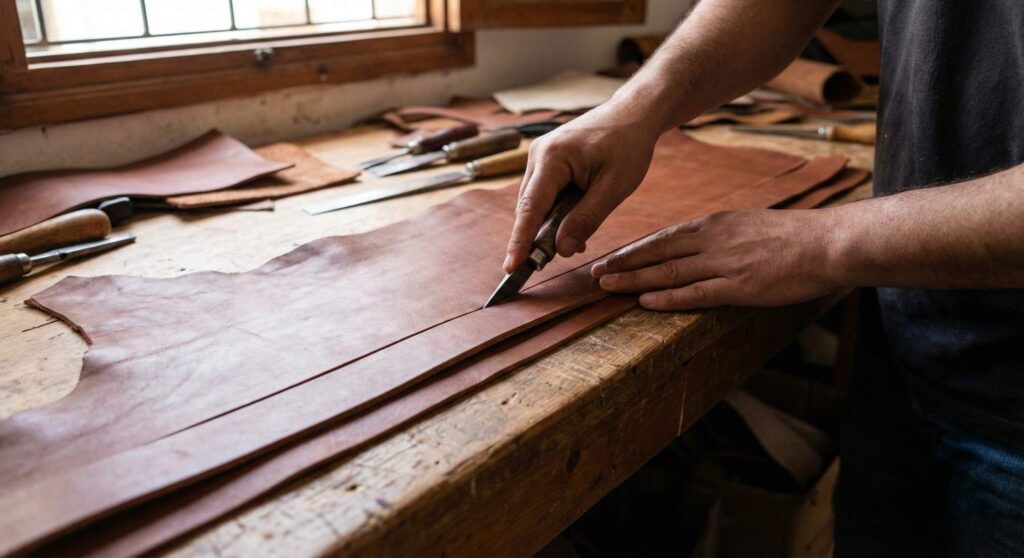
2. The Guillotine Cut
Once the perfect spot is located, the strap is cut. This requires a steady hand and nerves of steel. There is no “undo” button when slicing through premium leather. One wobble, and it’s scrap.
3. The Workout (Edge Burnishing)
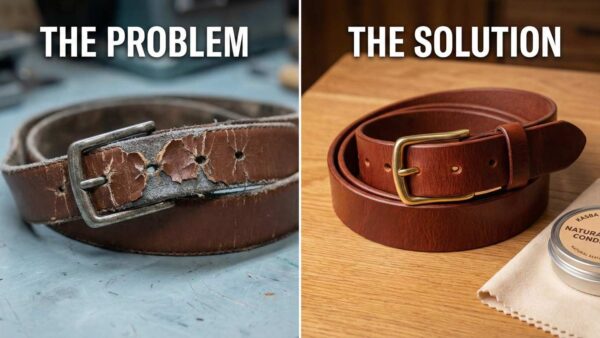
Have you ever noticed cheap belts have fuzzy, raw edges that eventually fray? That’s because they skipped the workout. Our artisans spend ages beveling (rounding) the edges and then burnishing them. This involves rubbing the edges vigorously with a wooden tool until the friction heats natural waxes, sealing the fibers and creating that smooth, slick finish. It’s an arm workout, trust us.
4. The Rhythm of the Stitch
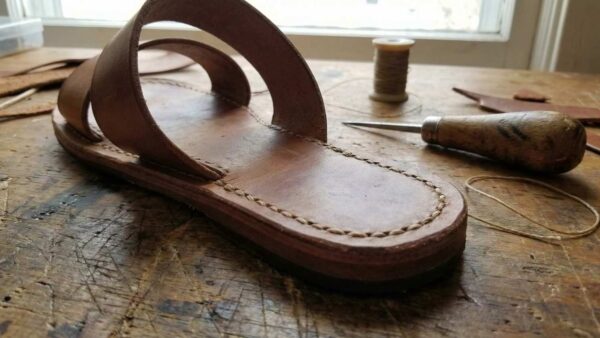
If your belt has stitching, it wasn’t done by a robot. It requires guiding thick, durable thread through the leather with a rhythm that ensures every stitch is equidistant. It’s hypnotic to watch, and incredibly difficult to master.
5. The Final Hardware Assembly
The buckle, the keeper loop, the rivets—they are all set by hand with a hammer and anvil. Whack. Whack. Perfect.
Why It Matters
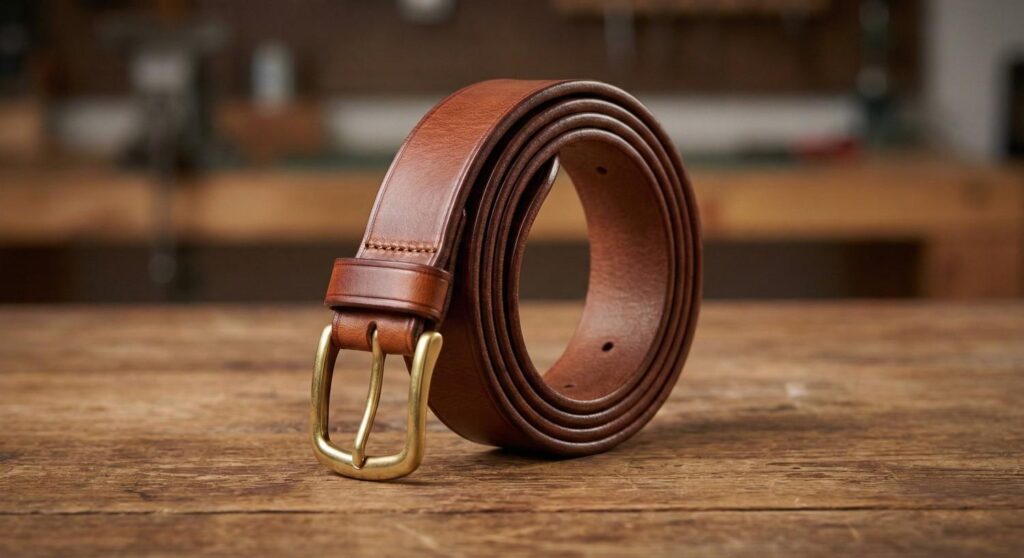
Why go through all this trouble when machines exist?
Because machines don’t have souls. A machine doesn’t care if the grain is slightly off. A machine doesn’t feel pride when the finished product gleams.
When you buy a Kasba Leather belt, you aren’t just buying an accessory; you are buying a piece of heritage. You are supporting a trade that refuses to die in the face of fast fashion.
Your belt has tiny imperfections that prove a human made it. It will break in, soften, and develop a patina that is unique to how you wear it. It’s built to last not just for a season, but for a lifetime.
So, the next time you loop that belt through your jeans in the morning rush, take half a second to appreciate it. It came a long way, from a skilled pair of hands in Morocco, just to keep your pants up with style.

Leave a comment