
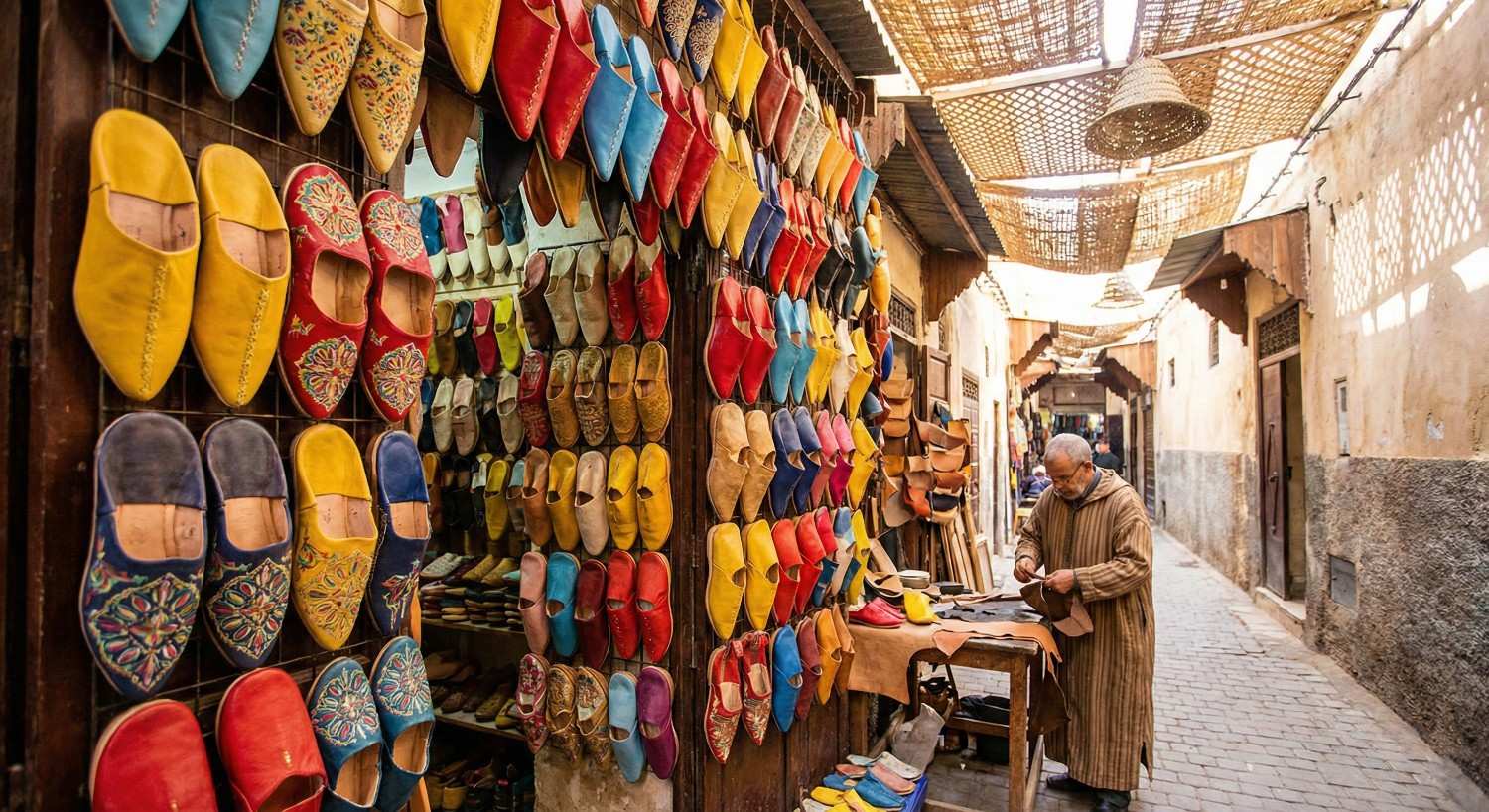
If you have ever wandered through the alleyways of a Moroccan médina, your senses were likely overwhelmed by the scent of spices, the sounds of metalworkers, and the vibrant colors of textiles. Yet, among these sensory delights, one item stands out as a true icon of Moroccan identity and craftsmanship: the babouche.
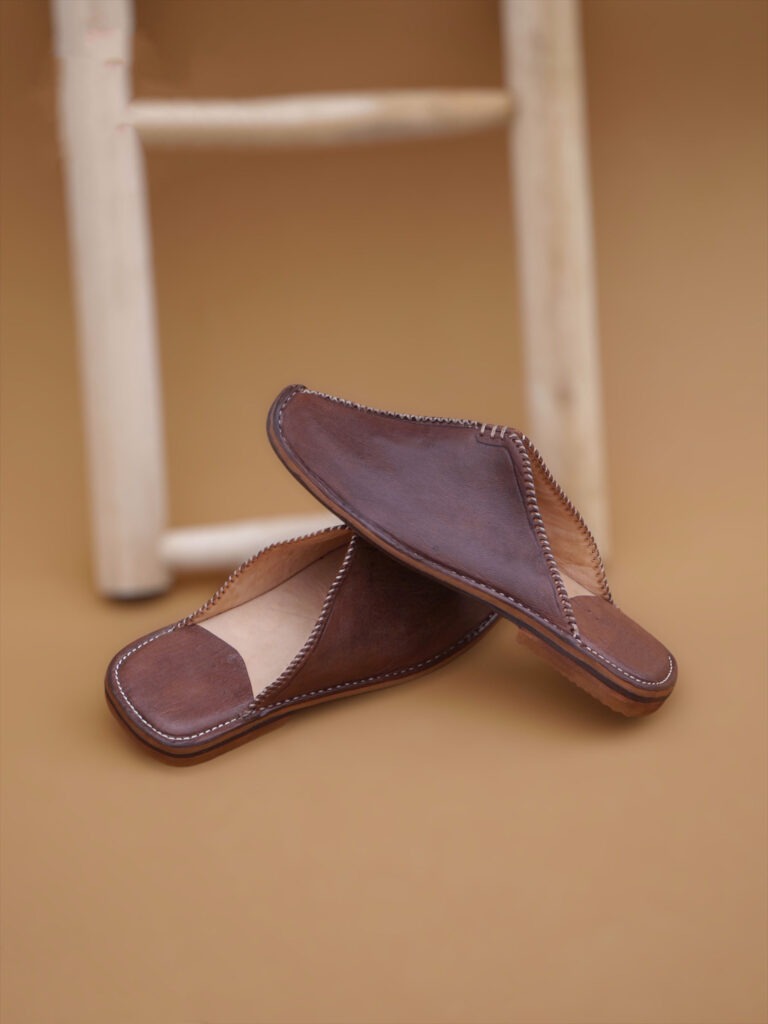
Graceful, practical, and steeped in history, the babouche is more than just a slipper; it is a symbol of a nation’s heritage that has successfully walked the path from ancient tradition to global fashion staple.
Here is a deep dive into the history of the Moroccan babouche slipper.
The Roots: Etymology and Ancient Origins
The history of the Moroccan babouche is long, winding, and slightly mysterious, much like the streets of Fez where so many are made.
While deeply associated with Morocco, the concept of the babouche traces its roots back centuries across the broader Middle East and North Africa. The word “babouche” itself is the French adaptation of the Persian word “papush” (pa meaning “foot” and push meaning “covering”).
It is difficult to pinpoint an exact date of invention, but historians agree that this style of soft-soled footwear has been worn by Bedouin tribes and urban dwellers across the Maghreb for well over a thousand years. They were born out of necessity: a lightweight, breathable covering designed for hot climates, easily removable for prayer five times a day, and practical for walking on sandy terrain or carpeted interiors.
The Anatomy of the Babouche: Two Distinct Styles
When discussing the history of the Moroccan babouche, it is crucial to understand that not all slippers are created equal. While there are endless variations in color and embroidery, they generally fall into two distinct historical camps based on geography and gender norms.
1. The “Belgha” (Fez Style)
Traditionally worn by men, the Belgha is characterized by its sharp, pointed toe. Historically, the most classic version is made of vibrant yellow leather, dyed using saffron or turmeric, and worn with a traditional djellaba. While today they come in all colors, the pointed “Fez” style remains a symbol of formal attire and urban sophistication.
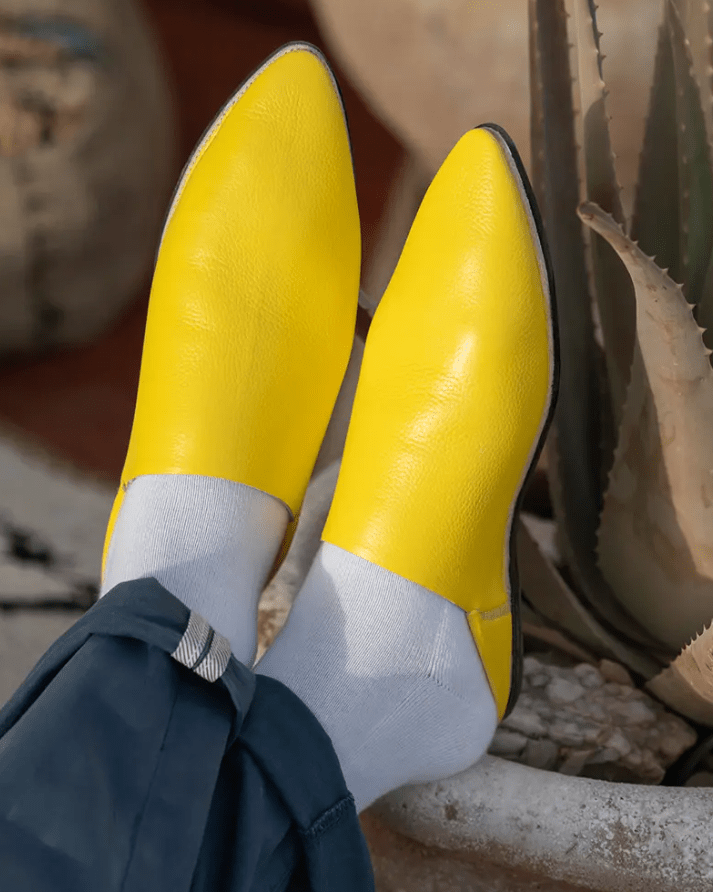
2. The Marrakech Style
Often referred to as the “Berber” style, these babouche feature a rounded or squared-off toe. Historically, these were more commonly worn by women and were often richly decorated with embroidery, sequins, or patterned fabrics, reflecting regional tribal identities.
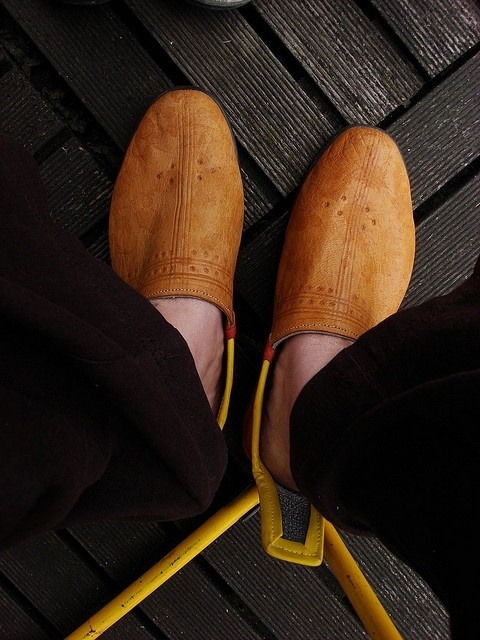
The Common Thread: The Foldable Heel Regardless of the toe shape, the defining historical feature of the true Moroccan babouche is the heel. While it can be pulled up, it is almost always designed to be folded down flat under the heel of the wearer. This design ingenuity allows for easy transitioning between outdoor walking and entering private homes or mosques, where shoes must be removed quickly.
The Craft: The Soul of the Slipper
You cannot tell the history of the Moroccan babouche without telling the story of the tanneries. The soul of the slipper lies in its creation.
For centuries, the process has remained largely unchanged, centered in the ancient cities of Fez and Marrakech. The famous Chouara Tannery in Fez dating back to the 11th century, is still in operation today. Here, animal hides (sheep, goat, or cow) are manually processed in vast stone vats filled with natural mixtures of limestone, pigeon guano, and natural dyes derived from poppy flower (red), indigo (blue), and saffron (yellow).
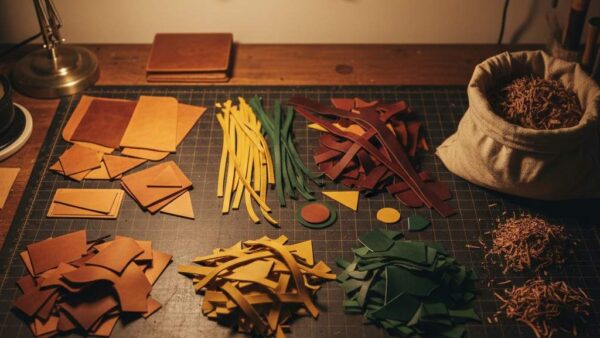
Once tanned, the leather is handed off to the maâlems (master craftsmen). In small workshops within the souk, these artisans cut the soles and uppers by hand and stitch them together using techniques passed down through generations. A high-quality traditional babouche contains no glue and no plastic; it is an entirely organic product of the earth and human hands.
Cultural Significance: The Democratic Shoe
In Moroccan history, the babouche has been a notably democratic piece of footwear. It bridged class divides. From the Sultan in his palace to the merchant in the souk, everyone wore babouche.
However, the quality and color historically denoted status. A pristine, bright yellow pointed Belgha signaled a man of importance dressed for a special occasion, like Friday prayer or a wedding. A worn, plain brown pair might indicate a working-class individual going about their daily business.
For weddings, white or cream babouche are traditionally essential for the groom, symbolizing purity and new beginnings.
The Modern Evolution: From the Souk to the Runway
How did a medieval North African slipper end up in the pages of Vogue?
The 20th century saw the babouche travel beyond Morocco’s borders. In the 1960s and 70s, as Marrakech became a haven for bohemians, rock stars, and artists (notably Yves Saint Laurent, who championed Moroccan aesthetics), the babouche was adopted by the West as a symbol of relaxed, exotic counter-culture.
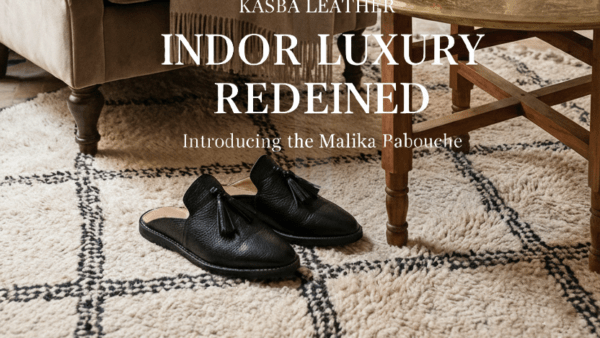
By the 2010s, high fashion took notice. Major luxury houses began sending models down runways in sleek, modernized versions of the babouche—often emphasizing the “backless loafer” look that the folded-down heel pioneered centuries ago.
Walking Forward
Today, the history of the Moroccan babouche is still being written. While cheap, mass-produced imitations flood the market, there is a powerful revival of authentic, slow-fashion artisanship.
Modern Moroccan designers are blending ancient techniques with contemporary aesthetics, ensuring that the babouche remains relevant. Yet, despite these updates, the essential character of the slipper remains: comfort, practicality, and a direct lineage to the ancient artisans of the Maghreb. To wear a pair is to walk in history.
Leave a comment