
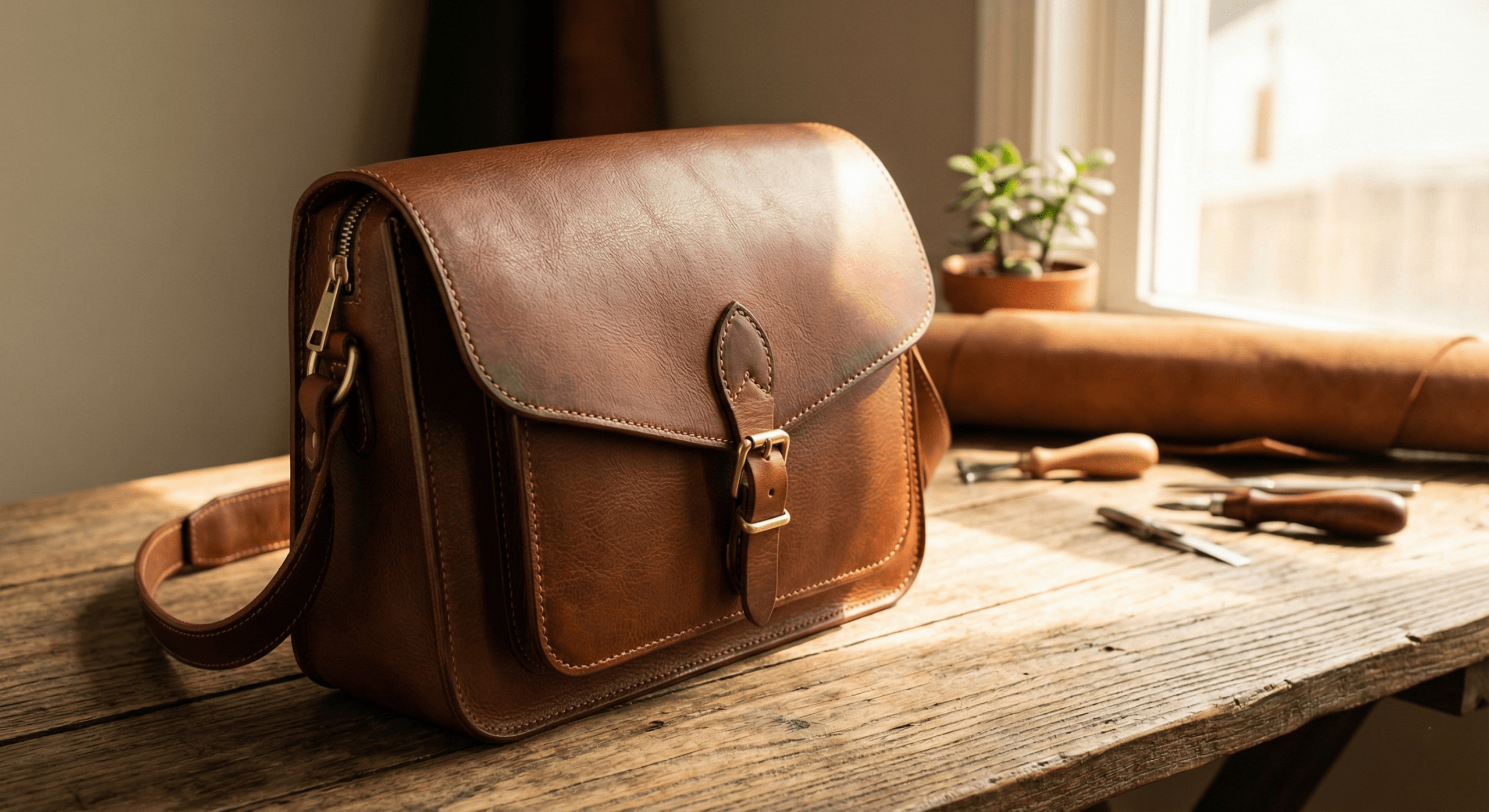
There are few accessories as timeless, versatile, and coveted as a great leather bag. A quality leather piece isn’t just a carrier for your daily essentials; it’s an investment, a statement of style, and a companion designed to last for decades.
However, the modern marketplace is flooded with options, making it incredibly difficult to distinguish between artisanal mastery and mass-produced mediocrity. We have all seen bags labeled “Genuine Leather” that peel and crack after six months of use.
Price isn’t always the best indicator of quality, and clever marketing can disguise inferior materials. To ensure you are investing my money wisely, you need to know what to look for.
Here are five undeniable signs that a leather bag is truly high quality.
1. The Grade of Leather: Look for Full-Grain
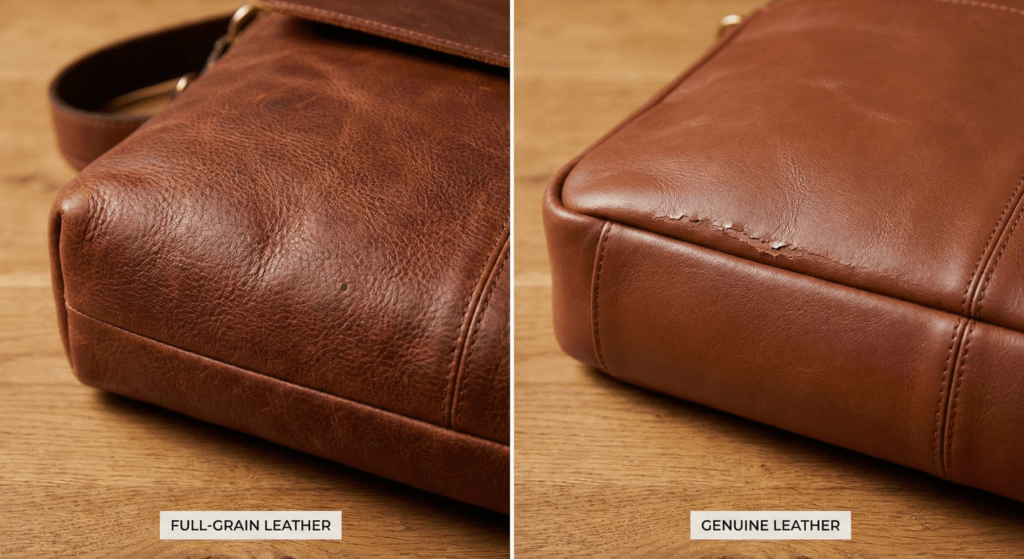
The most critical factor in the quality of a bag is, unsurprisingly, the leather itself. The confusing terminology used by manufacturers is often designed to mislead you.
The gold standard is Full-Grain Leather. This is the top layer of the hide, containing the strongest fibers. It hasn’t been sanded or buffed to remove imperfections. Because it’s natural skin, it might show subtle blemishes like scars or insect bites—these are actually signs of high quality, proving the leather hasn’t been heavily processed. Crucially, full-grain leather will develop a rich “patina” over time—a desirable sheen that darkens and beautifies with age and use.
What to avoid: Be wary of “Genuine Leather” stamps. While technically made of real skin, this is usually the lowest quality grade, often made from the bottom layers of hide scraps bonded together with glue and painted to look like top-grain. It will not develop a patina; it will eventually peel and crack.
2. The Sniff Test: A Rich, Earthy Aroma
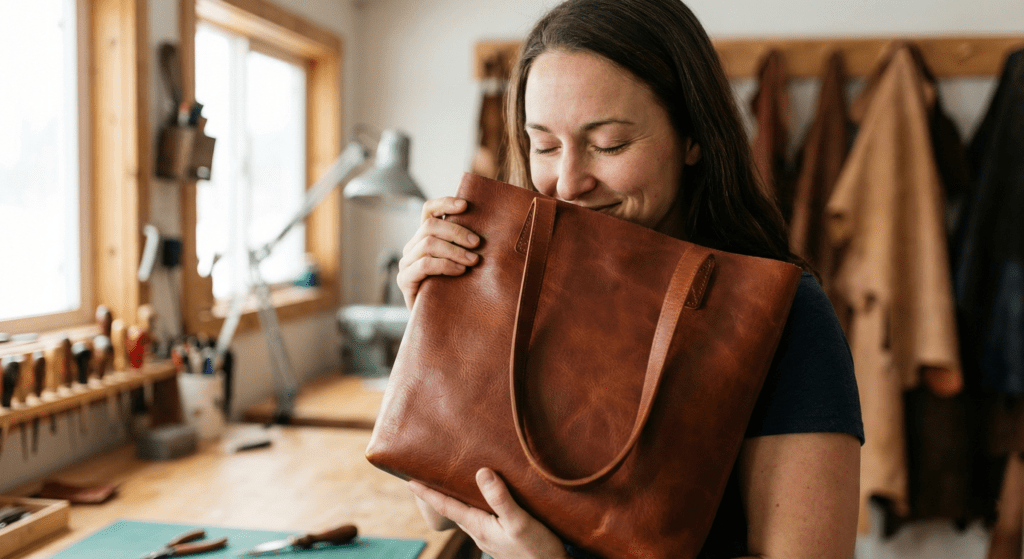
Never underestimate your sense of smell when buying leather goods. High-quality leather tanning is a complex, often lengthy process using natural tannins (vegetable tanning) or carefully managed chromium salts.
A high-quality bag should have a distinct, rich, and earthy aroma. It should smell pleasant and natural.
What to avoid: If the bag smells strongly of chemicals, plastic, or glue, walk away. This chemical stench indicates cheap processing methods, heavy use of synthetic coatings to hide poor-quality hide, or adhesives used in “bonded leather.” That smell rarely goes away; it just gets worse in heat.
3. The Hardware: Heavy, Smooth, and Solid
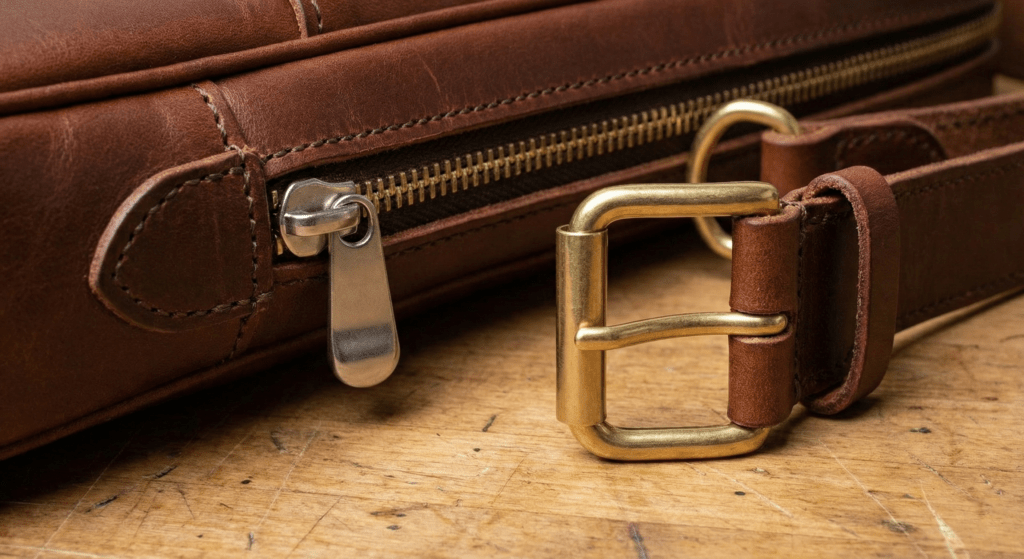
Hardware—the buckles, zippers, clasps, and D-rings—are the “jewelry” of the bag. On high-quality pieces, the hardware is built to last as long as the leather.
Feel the hardware. It should have weight to it. High-end bags typically use solid brass, stainless steel, or plated zamak. Cheap bags use hollow pot metal that feels light and plasticky.
Pay special attention to the zippers. A quality zipper (brands like YKK’s high-end lines, Riri, or Lampo are good indicators) should glide smoothly without catching. The zipper teeth should feel substantial, not flimsy and sharp.
4. The Stitching: Precise and Uniform
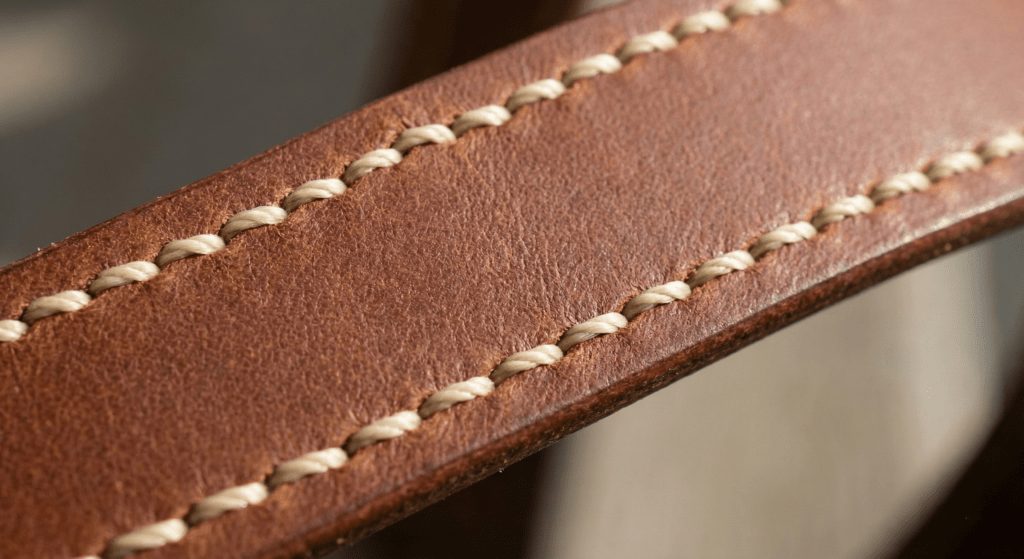
Craftsmanship is revealed in the details, and nothing reveals lazy craftsmanship faster than bad stitching.
Inspect the seams closely, especially around corners and stress points where the straps meet the body. On a high-quality bag, the stitching will be perfectly straight, uniform, and evenly spaced. There should be no loose threads, frayed ends, or missed stitches.
Furthermore, consider the thread itself. Quality artisans use durable, bonded nylon or waxed linen thread that is thick enough to hold the heavy leather together under stress. Thin, weak cotton thread is a sign that the bag wasn’t built for the long haul.
5. The Edge Finishing: Burnished vs. Painted
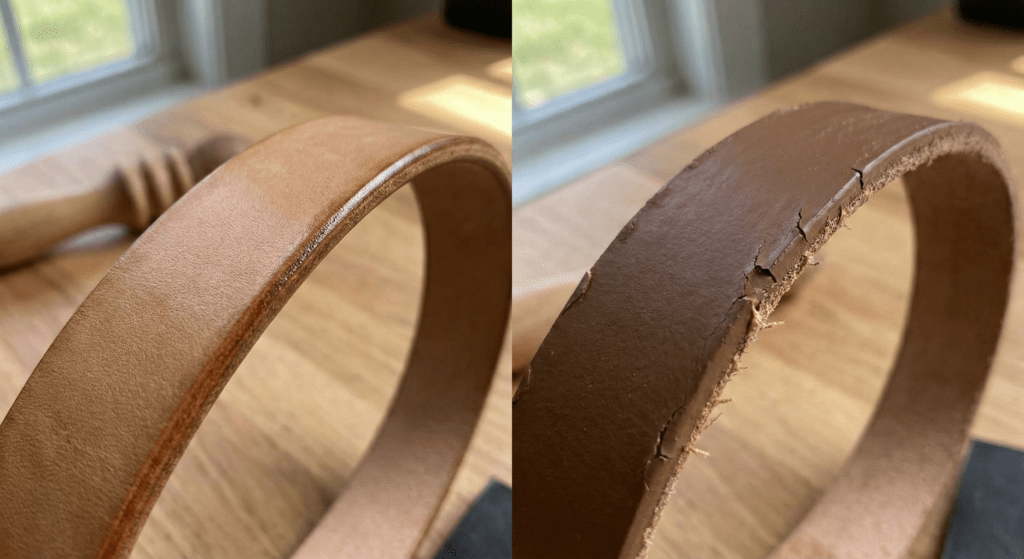
How the raw edges of the leather hide are treated tells you a lot about the time and effort put into the bag’s construction.
In high-quality leather crafting, particularly with vegetable-tanned leather, artisans use a technique called burnishing. This involves sanding the raw edge smooth, applying natural gums or waxes, and then vigorously rubbing it with a wood slicker. The friction creates heat, sealing the leather fibers into a smooth, glossy, durable edge that won’t fray.
What to avoid: Cheaper mass-produced bags usually take a shortcut called “edge painting.” They apply a thick layer of rubbery vinyl paint over the raw edge to hide it. While it looks neat when new, this paint almost always cracks and peels off within a year or two of flexing, leaving the raw leather underneath exposed and frayed.
Summary
Buying a leather bag is an emotional purchase, but it should also be a rational one. By looking past the brand name and focusing on these five tangible indicators—the grain, the smell, the hardware weight, the stitch precision, and the edge finishing—you can ensure that the bag you choose will only get better with time.

Leave a comment