
Leather is one of humanity’s oldest and most versatile materials. From the soles of Roman sandals to the upholstery of modern luxury vehicles, it has shaped our history and culture. However, the finished product we recognize as “leather” does not start that way. It begins as a raw, perishable hide that must undergo a complex chemical process to become durable and usable. This process is called tanning.
For the conscious consumer, the artisan crafter, or the fashion enthusiast, understanding how leather is made is crucial. It is not just about aesthetics; it is about durability, environmental stewardship, and health. Today, the leather industry is dominated by two primary methods: the ancient art of vegetable tanning and the modern industrial standard of chrome tanning.
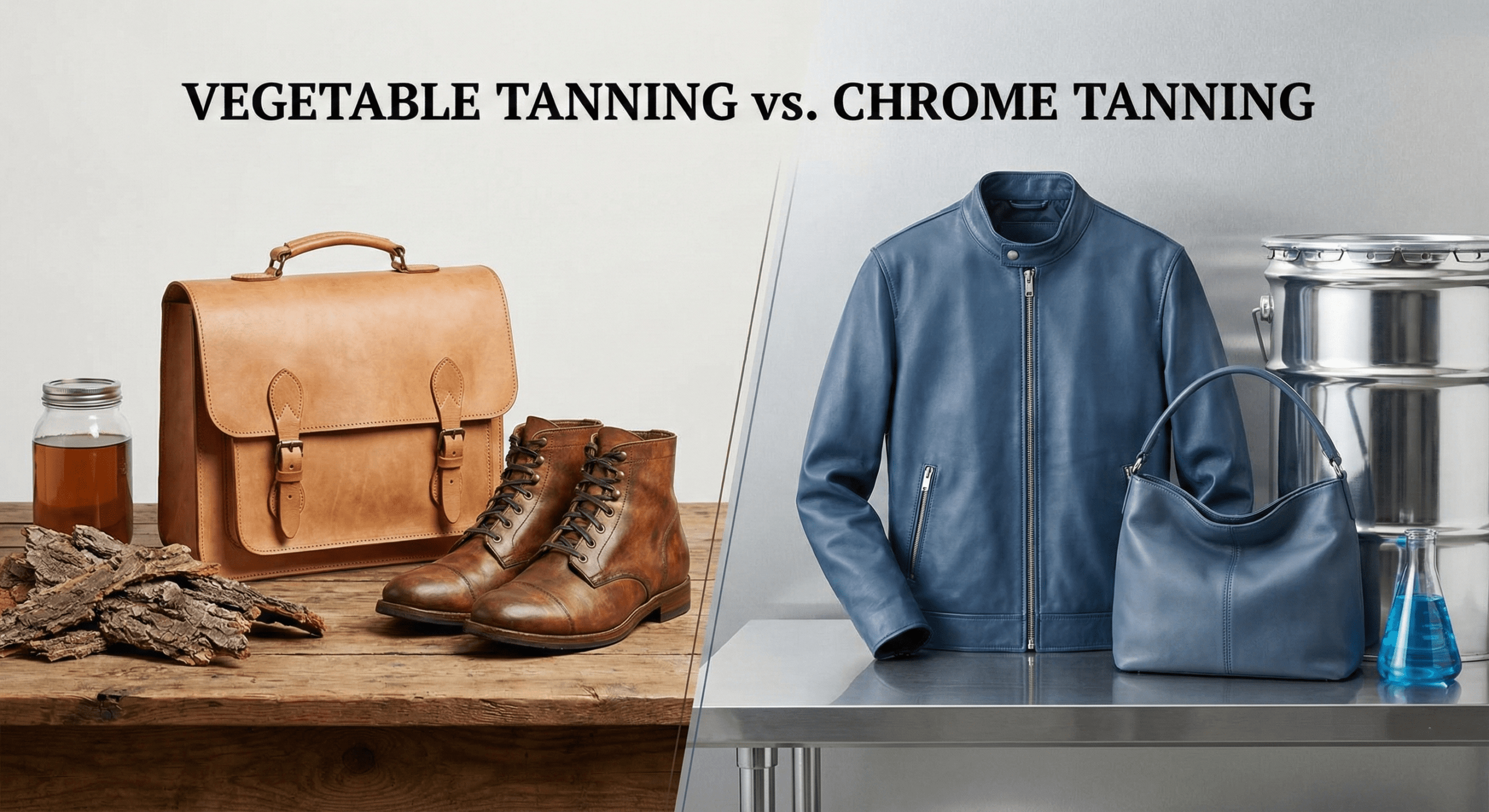
The debate of vegetable tanning vs chrome tanning is central to understanding leather quality and impact. While both methods transform raw hide into leather, their processes, results, and ecological footprints are vastly different. This article delves deep into these differences, explaining why your choice of tanning method truly matters.
What Exactly is Tanning?
Before diving into the specifics of vegetable tanning vs chrome tanning, it is essential to understand the basic objective. A raw animal hide is primarily made of collagen fibers. Left untreated, these fibers will putrefy and rot. If dried without treatment, the hide becomes stiff and brittle.
Tanning is the process of permanently altering the protein structure of the skin. Tanning agents penetrate the hide, displacing water and binding with the collagen fibers to stabilize them. The result is a material that is resistant to bacteria, flexible, and durable leather.
Chrome Tanning: The Modern Industrial Engine
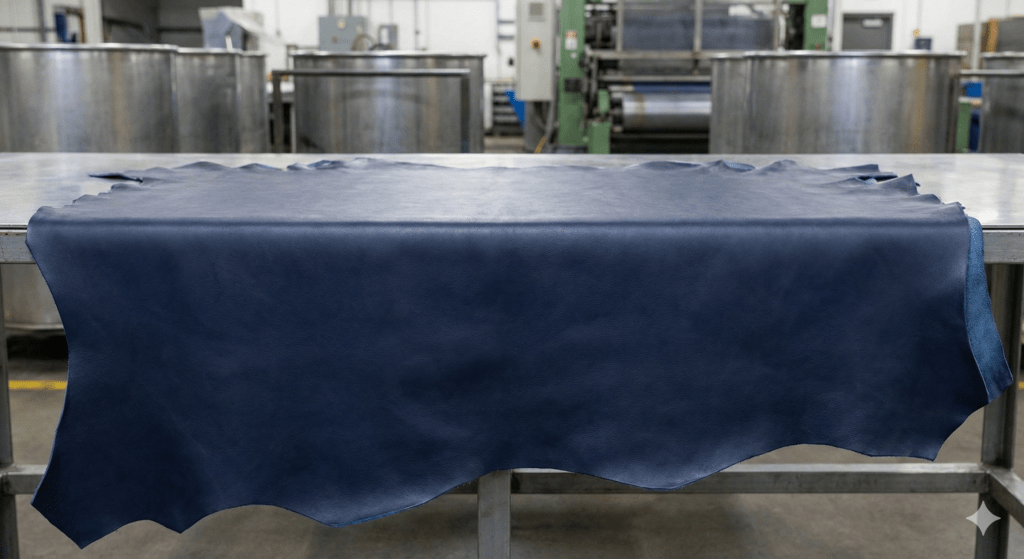
If you own a leather jacket, a soft handbag, or leather car seats, there is an overwhelming chance it is chrome tanned. Accounting for roughly 80-90% of global leather production, chrome tanning is the undisputed king of the modern industry.
The History and Process
Invented in the mid-19th century during the Industrial Revolution, chrome tanning changed leather production forever. It replaced months-long processes with one that could be completed in a matter of days.
The process utilizes chromium salts—specifically trivalent chromium (chromium III)—dissolved in acidic water. Hides are loaded into massive rotating drums filled with this blue-hued chemical “liquor.” The tumbling action creates heat and pressure, forcing the chromium ions rapidly between the collagen fibers. Once penetrated, the acidity is neutralized, causing the chromium to permanently bond with the skin structure. This phase creates “wet blue” leather, named for its distinct color before final dyeing.
Characteristics of Chrome Tanned Leather
The primary advantage of chrome tanning is efficiency, which translates to lower costs. However, the resulting leather has distinct properties:
- Softness and Pliability: Chrome leather is typically supple and flexible right out of the tannery, making it ideal for garments and upholstery where drape is important.
- Color Consistency: It accepts dyes readily, allowing for vibrant, uniform, and lasting colors that do not easily fade.
- Resistance: It generally has higher resistance to water and heat compared to vegetable-tanned alternatives.
- Aesthetics: It often looks more “finished” and uniform, sometimes lacking the natural grain character of the hide. It does not develop a significant patina over time.
Vegetable Tanning: The Ancient Artisan Method
Vegetable tanning is the “slow food” movement of the leather world. It is one of the oldest known methods of manufacturing leather, with roots tracing back thousands of years to ancient Egypt, Greece, and Rome.
The History and Process
This method relies on nature. “Vegetable” refers to the tanning agents used: tannins. Tannins are naturally occurring astringent chemical compounds found in the bark, leaves, fruit, and roots of various plants. Common sources include oak, chestnut, quebracho, and mimosa trees.
The process is labor-intensive and requires immense patience. Traditionally, hides are suspended in a series of pits or vats containing progressively stronger concentrations of tannin solutions. Over weeks, or even months, the tannins slowly displace the water bound in the hide’s collagen. It is a delicate art that requires skilled artisans to monitor the transformation.
Characteristics of Vegetable Tanned Leather
Because it is a natural process, vegetable-tanned (or “veg-tan”) leather is distinct in its look, feel, and smell:
- Robust and Stiff: Initially, veg-tan leather is thicker and stiffer than chrome leather. It requires a “break-in” period to soften.
- The “Smell of Leather”: The rich, earthy, sweet aroma commonly associated with high-quality leather goods comes almost exclusively from vegetable tanning.
- Malleability: When wet, veg-tan leather can be molded, tooled, carved, and stamped, retaining the shape once dry. This makes it the only choice for traditional leathercraft like saddlery, holsters, and decorative armor.
- Patina: This is perhaps its most beloved feature. Veg-tan leather is not static. It reacts to its environment—sunlight, oils from your hands, and daily friction cause it to darken, soften, and develop a unique sheen called a patina. It tells the story of its use.
Head-to-Head Comparison: Performance and Use
When deciding between vegetable tanning vs chrome tanning for a specific application, understanding their functional differences is key.
| Feature | Vegetable Tanned Leather | Chrome Tanned Leather |
| Production Time | Weeks to months | 1 to 3 days |
| Cost | High (labor and time intensive) | Low (mass production efficient) |
| Feel (Hand) | Firm, thick, robust (softens with use) | Soft, pliable, supple immediately |
| Aesthetics | Natural, earthy tones. Shows hide imperfections. | Uniform color, often corrected grain. |
| Aging | Develops a rich patina, darkens with light. | Color remains stable. Does not patina significantly. |
| Water Resistance | Low. Absorbs water and can spot easily. | Moderate to High. |
| Typical Uses | Belts, wallets, saddles, shoe soles, heritage goods. | Fashion jackets, upholstery, car interiors, gloves, standard shoes. |
Durability Debate
Which lasts longer? It depends on how you define “last.”
Chrome tanned leather is incredibly tough in the short to medium term. It resists cracking and handles heat well. However, once the fibers eventually break down, there is little that can be done to restore it.
Vegetable-tanned leather is incredibly durable in terms of tensile strength and longevity if maintained. Because the fibers remain intact and are breathable, it can last for decades, or even centuries. If it dries out, it can often be restored with quality oils and conditioners. However, if neglected and exposed to constant moisture without care, it can deteriorate faster than chrome leather.
The Environmental Impact: The Crucial Difference
In the 21st century, the conversation regarding vegetable tanning vs chrome tanning often revolves around sustainability. This is where the contrast is starkest.
The Chrome Tanning Controversy
The primary criticism of chrome tanning involves its chemical waste. While the trivalent chromium used in the process is generally considered safe for humans in finished products, the tanning process itself carries risks.
If not managed under strict regulations, trivalent chromium can oxidize into hexavalent chromium (chromium VI) during the process or in waste runoff. Hexavalent chromium is a known human carcinogen and a severe environmental pollutant.
In developing nations with lax environmental regulations, untreated effluent from tanneries can contaminate waterways, devastating local ecosystems and poisoning drinking water for surrounding communities. Modern, responsible tanneries in highly regulated regions (like the EU and USA) have massive water treatment plants to recycle chromium and neutralize waste, mitigating these risks significantly, but the potential for harm remains an industry-wide challenge.
Also, because of the heavy metals present, chrome-tanned leather is generally not considered biodegradable and cannot be easily recycled.
The Vegetable Tanning Perspective
Vegetable tanning is often lauded as the eco-friendly option because it uses organic, renewable materials (tree bark and plant extracts). The resulting leather is inherently biodegradable under the right conditions. If you buried a veg-tan belt in your garden, it would eventually return to the earth without leaching heavy metals.
However, it is not perfectly “green.” The process consumes vast amounts of water. Furthermore, the effluent has a very high organic load, which, if dumped untreated into rivers, can deplete oxygen levels and kill aquatic life. While the inputs are natural, the scale of industrial vegetable tanning still requires robust wastewater treatment.
Furthermore, the harvesting of tannins must be managed sustainably to prevent deforestation, although many modern tannins are sourced from sustainable plantations or as byproducts of the timber industry.
Conclusion: Why It Matters
The choice between vegetable tanning vs chrome tanning is a classic trade-off between modern efficiency and ancient tradition, between instant gratification and long-term character.
If you need a soft leather jacket that will look exactly the same in five years as it does today, or if you are seeking an affordable leather sofa that can withstand spills, chrome tanning is the practical champion. It dominates the market because it delivers a consistent, versatile product quickly and cheaply.
However, if you value heritage, craftsmanship, and a connection to the natural world, vegetable tanning is incomparable. A veg-tan wallet or pair of boots is an investment. It requires care, but it rewards you by aging beautifully, developing a personalized patina that makes the item uniquely yours.
Ultimately, understanding these processes empowers you as a consumer. It allows you to look past the label “genuine leather” and ask deeper questions about quality, longevity, and the ecological footprint of the products you bring into your life. Whether you choose the modern convenience of chrome or the heirloom quality of vegetable tan, knowing the difference is the first step toward conscious consumption.



Leave a comment