If you are a leather worker, you know the feeling. You’ve just finished cutting the panels for a weekender bag or a pair of sandals. The main pieces look beautiful, but you look down at the floor (or your cutting mat) and see a pile of irregular shapes, trimmings, and edges.
To the average person, that’s trash. To us, and to any serious artisan, that is potential.
At Kasba Leather, with over 30 years of craftsmanship in our blood, we have learned that respecting the animal means using every inch of the hide. Not only is this ethically the right thing to do, but for a business, throwing away leather is literally throwing away money.
Here is how we manage our “Zero Waste” workshop, and how you can apply these strategies to your own bench.
Phase 1: The Sorting Ritual
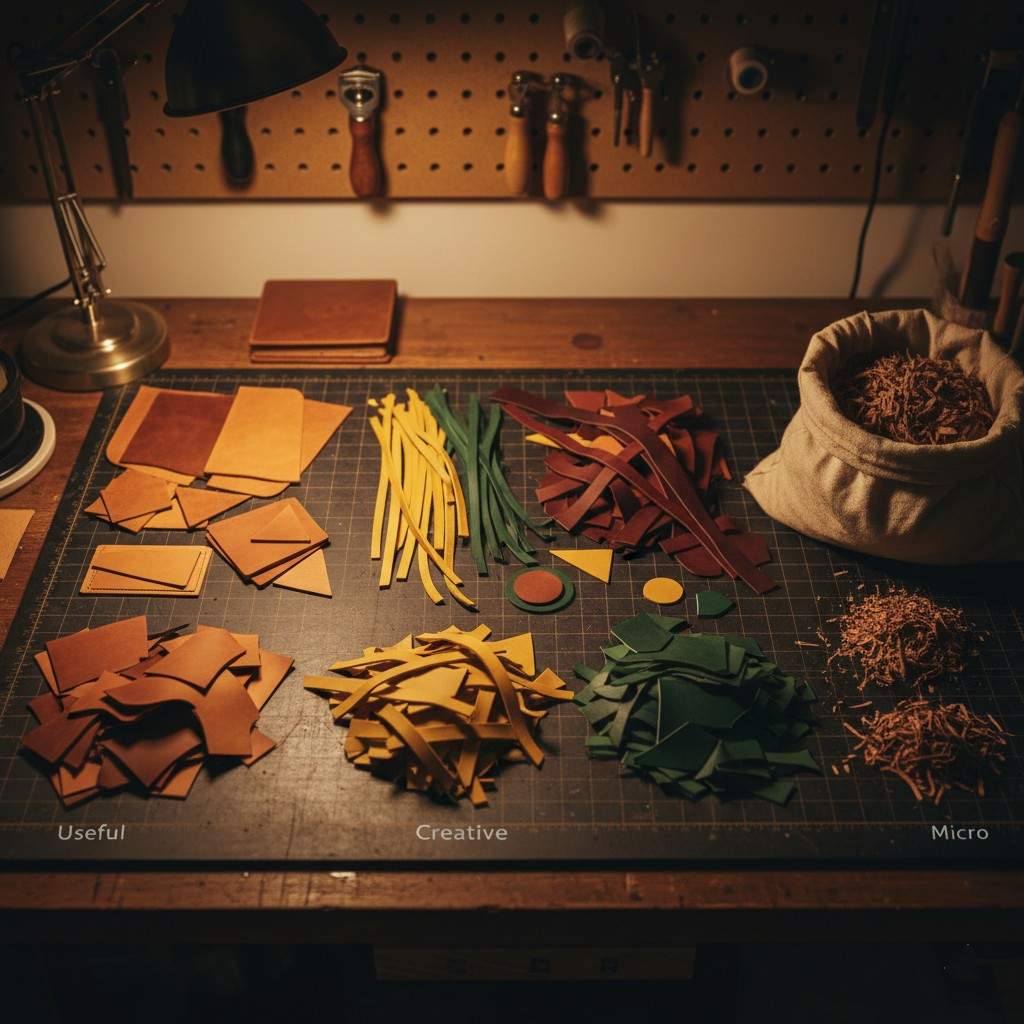
The battle against waste starts the moment the knife lifts off the hide. We don’t sweep everything into a bin. We sort immediately into three categories:
- The “Useful” Pile: Pieces large enough for card slots, keepers, or small structural patches.
- The “Creative” Pile: Long strips, odd triangles, and irregular shapes that have character.
- The “Micro” Pile: Tiny shreds, skivings, and dust.
Phase 2: Turning Scraps into Products
1. The “Useful” Pile: Small Leather Goods (SLGs)
The mid-sized scraps are the bread and butter of increasing your profit margin. We utilize these for our smaller accessories.
- Cardholders: A minimalist cardholder requires very little material but offers high value to the customer.
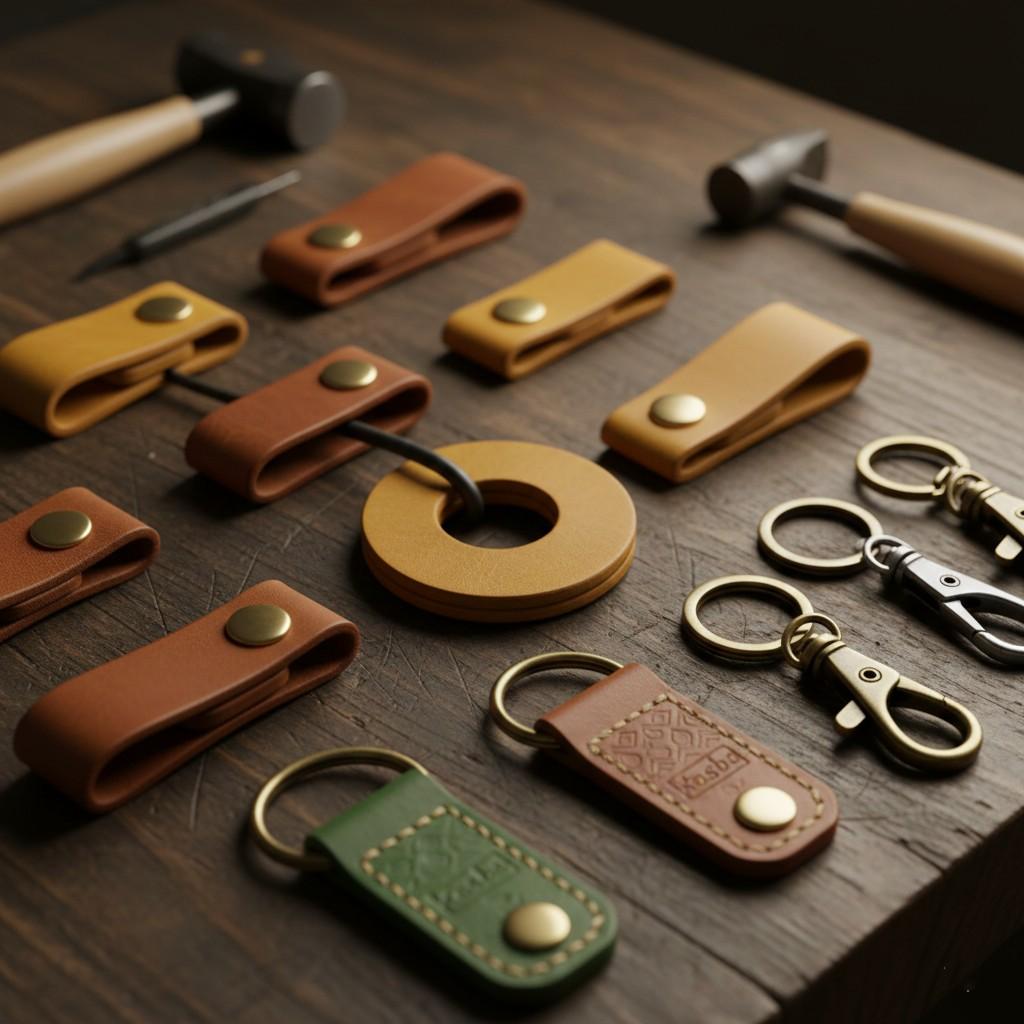
- Cord Keepers: In a tech-heavy world, leather cable organizers are bestsellers. They use small rectangles that would otherwise be useless.
- Tags and Keychains: We stamp the Kasba logo onto small rounds or shields of leather. These make excellent low-cost items or free gifts to include with larger orders to delight the customer.
2. The “Creative” Pile: Texture and Accents
This is where the artistry comes in. The long strips from the edge of a hide? They become:
- Zipper Pulls: A braided or knotted zipper pull adds a premium touch to a bag.
- Tassels: That odd, triangular piece? Fringe it. Tassels are timeless and use up difficult shapes.
- Wrapped Handles: If we have long, thin strips, we can wrap the handles of a tote bag. It adds grip, durability, and a rugged aesthetic.
3. The “Micro” Pile: The Secret Weapon
This is the part that stumps most hobbyists. What do you do with the skivings (the shavings from thinning leather) and the tiny clippings?
Do not throw them away.
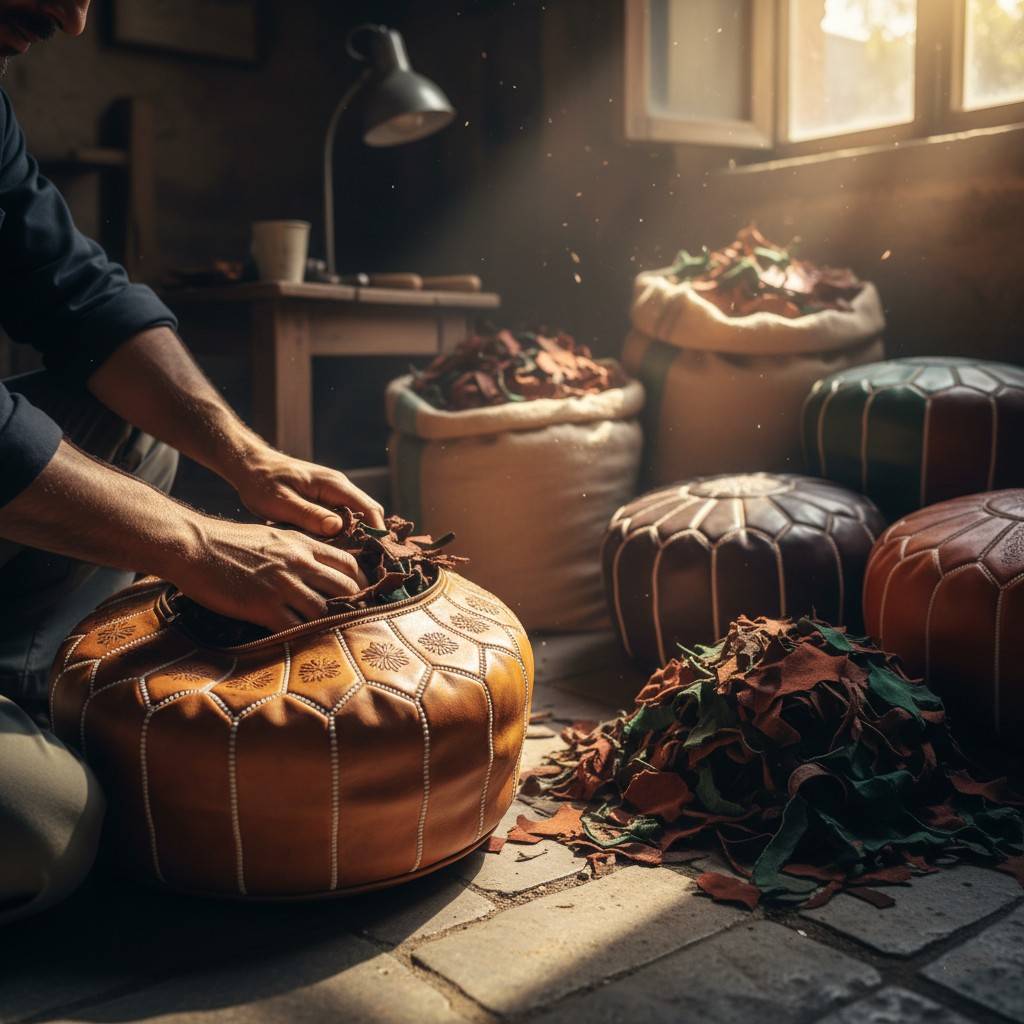
At Kasba, we collect these in large canvas sacks. Leather is a natural, dense material. When shredded or packed tightly, it makes incredible stuffing.
- The Moroccan Pouf: The traditional way to stuff a pouf is with old fabric and leather scraps. It provides a heavy, solid structure that foam simply cannot replicate.
- Punching Bags: For the heavy hitters, a leather-dust filled heavy bag is the gold standard for density.
The “Frankenstein” Method: Patchwork
When we have enough high-quality scraps that match in leather type (usually our vegetable-tanned leftovers), we experiment with patchwork.
Sewing scraps together to form a new “hide” creates a unique, mosaic aesthetic. It takes more time, yes, but it tells a story. A patchwork tote bag isn’t just a bag; it’s a testament to the fact that nothing was wasted in its creation.
Conclusion: Value Your Material
Leather is expensive. It requires resources to grow, tan, and transport. As artisans, it is our duty to honor that process.
Next time you look at your scrap bin, don’t see waste. See your next product line.
Leave a comment