
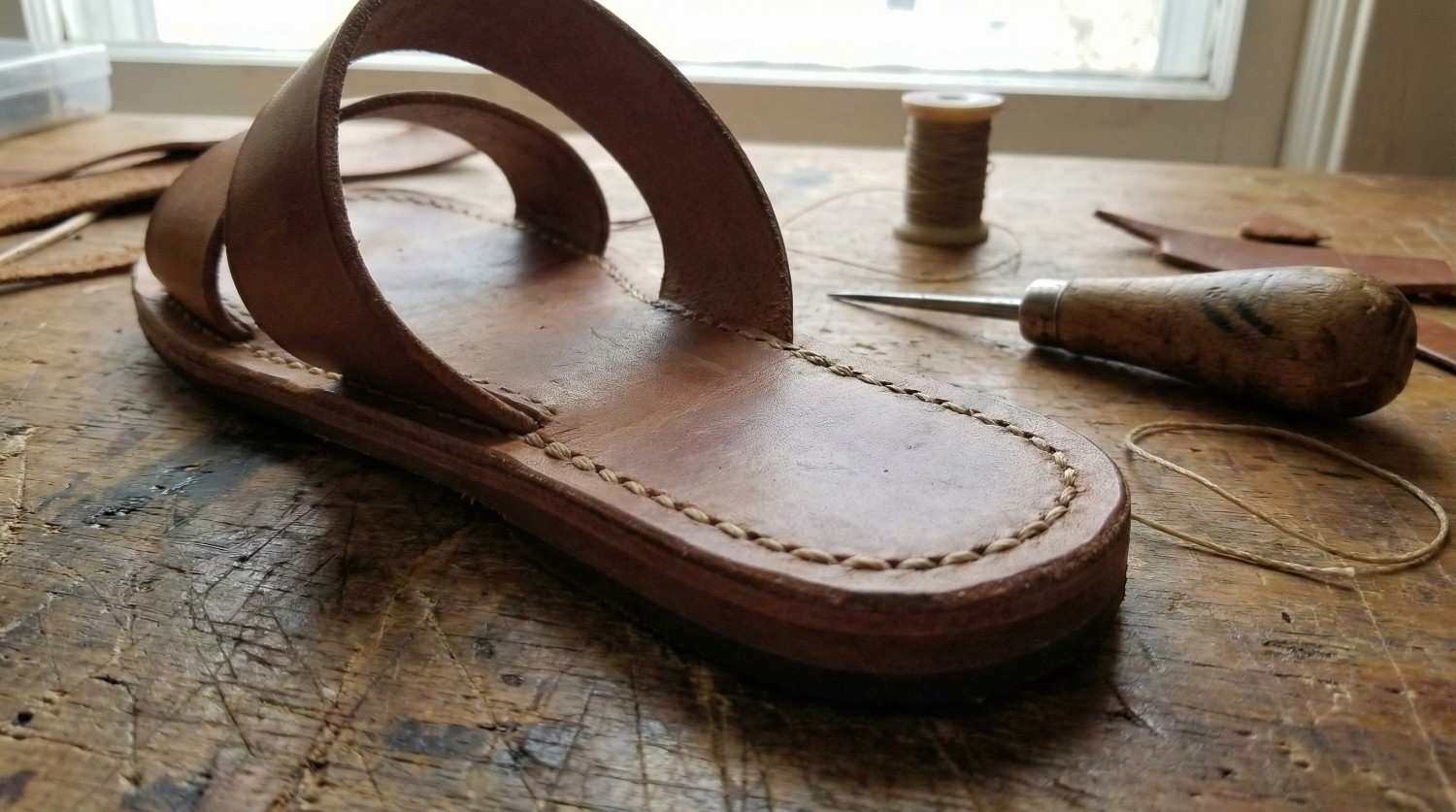
We have all been there. You buy a pair of stylish sandals for the summer. They look great in the store, but after a few weeks of walking in the heat, disaster strikes. The sole begins to peel away from the upper like a banana skin, leaving you tripping over your own feet.
Why does this happen? The answer lies in one invisible detail: The Adhesive.
At Kasba Leather, we believe that true luxury lies in longevity. That is why we refuse to take the shortcuts that mass-market brands rely on. Today, we are taking a microscope to our manufacturing process to explain the battle between Hand-Stitching and Industrial Glue.
The Industry Standard: “Cemented Construction” (The Glue Trap)
90% of the footwear on the market today—from fast fashion to expensive designer labels—uses what is known as “cemented construction.”
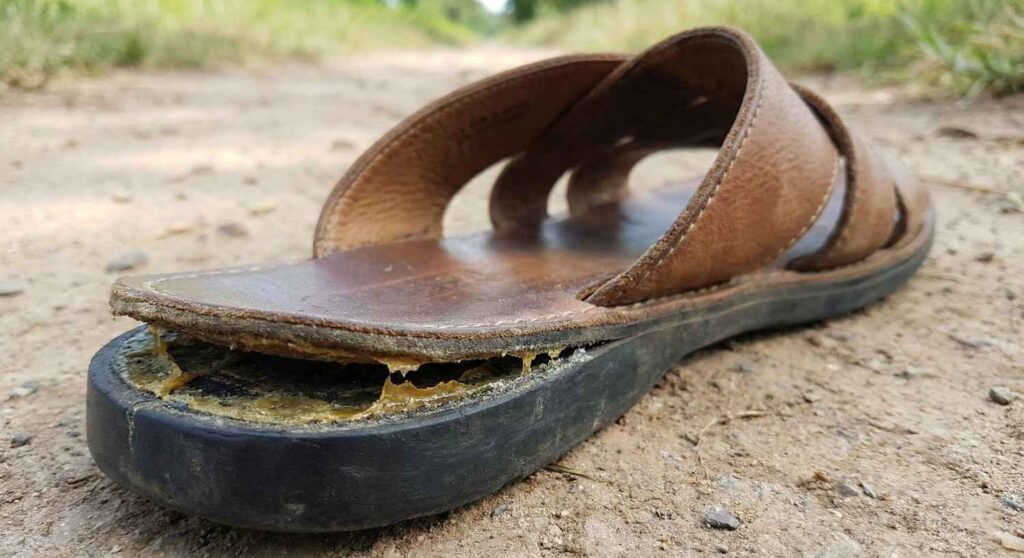
In simple terms, the upper part of the shoe is glued to the sole using heavy-duty industrial adhesives.
- The Pro: It is cheap and incredibly fast to manufacture.
- The Con: Glue has a shelf life. It reacts poorly to heat and moisture—two things your sandals will definitely encounter in the summer. Over time, the chemical bond breaks down (a process called hydrolysis), causing the sole to detach.
Once a glued shoe separates, it is rarely fixable. You throw it away and buy another. This is the cycle of fast fashion.
The Kasba Standard: The Art of the Stitch
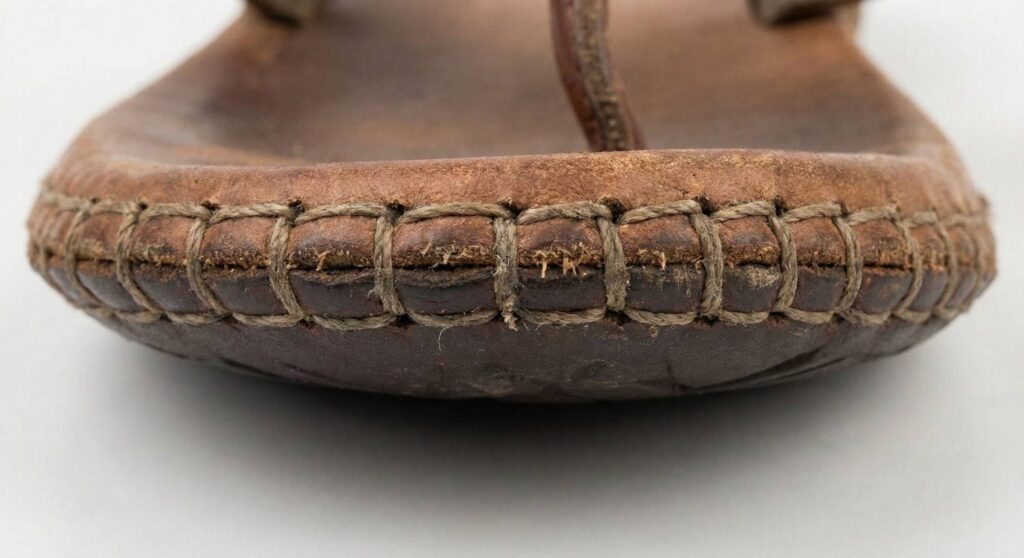
We do things differently. When you pick up a pair of Kasba Leather sandals, turn them over. You will see a line of thick, waxed thread weaving through the leather.
This isn’t decoration; it is structural integrity.
1. The Mechanical Bond
Stitching creates a physical, mechanical bond between the leather upper and the sole. Unlike glue, thread does not “expire” or melt in the Moroccan heat. It holds the shoe together through friction and tension. This means you can walk thousands of miles without fear of your sole flapping open.
2. Repair, Don’t Replace
The beauty of a stitched sole is that it is serviceable. If you wear through the sole after years of love, a cobbler can cut the threads, replace the sole, and stitch it back on. A glued shoe is a disposable commodity; a stitched shoe is a renewable asset.
3. Breathability and Flex
Glue creates a rigid, airtight seal that can make feet hot and sweaty. Stitching allows the layers of leather to breathe and flex naturally with your foot, offering a more comfortable walk that breaks in beautifully over time.
30 Years of Hands, Not Machines
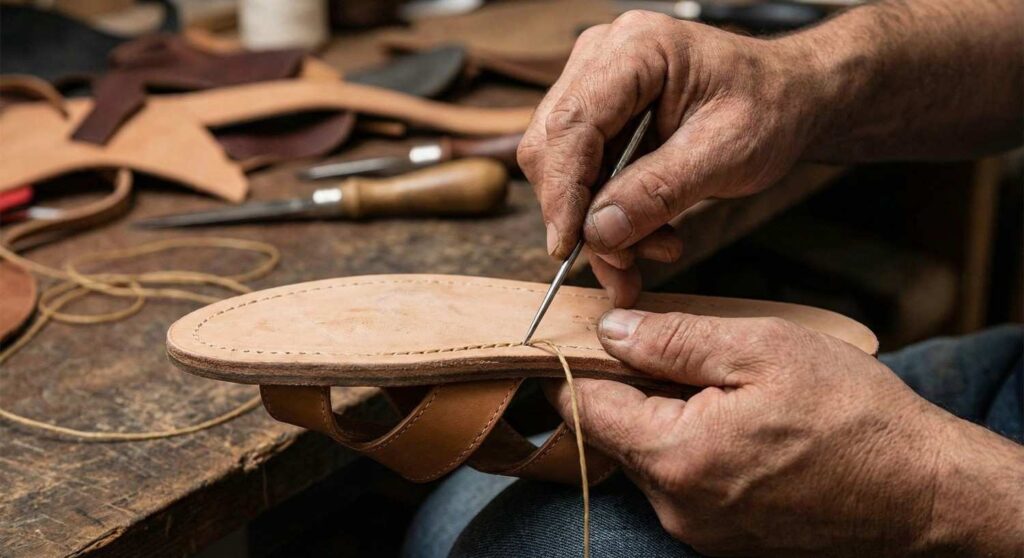
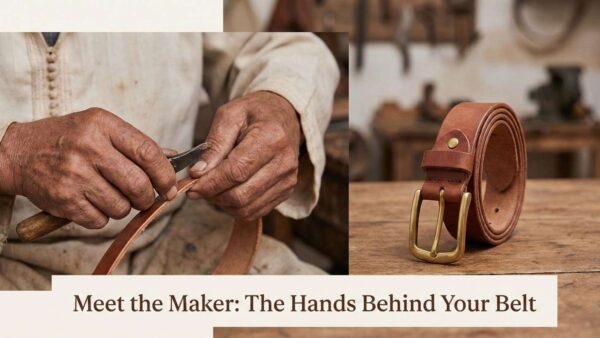
Stitching a sole by hand is hard work. It takes strength, precision, and patience—skills that our head craftsman (and father) has refined over 30 years of leatherwork.
A machine can glue a thousand shoes in an hour. An artisan can only stitch a few pairs a day. We choose the slower path because we aren’t just selling you a look; we are selling you a promise that your sandals will last.
The Verdict
- Glue: Cheap, fast, disposable, fails in heat.
- Stitch: Durable, breathable, repairable, timeless.
Next time you are shopping for footwear, take a close look at the sole. If you don’t see the stitches, you might want to think twice.
Recommended Reading (Backlinks)
- Learn more about identifying high-quality leather before you buy.
- Read about the environmental impact of disposable fashion.
Step into quality that lasts. Explore our collection of hand-stitched leather sandals and feel the difference for yourself. [Shop The Collection]

Leave a comment